


search
date/time

Sat, 10:00PM
overcast clouds
16.4°C
WNW 5mph
overcast clouds
16.4°C
WNW 5mph
 | Sunrise | 3:49AM |
| Sunset | 8:12PM |  |

Andrew Palmer
Group Editor
P.ublished 23rd May 2026
lifestyle
Book Review: The Walking Cure By Annabel Streets
A Prescription Written In Footsteps.
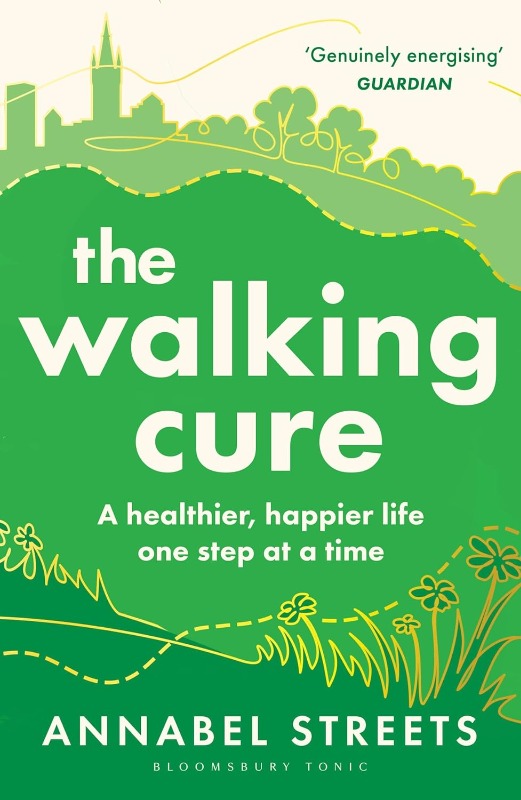
Annabel Streets has, and she has spent a book wondering why it works.
The Walking Cure is a quietly radical proposition dressed in the gentlest of clothes: that the ground beneath our feet is not neutral. A shoreline is not a woodland, a meadow, or a high street—to the heart, to the lungs, to the cells. Streets, with the assurance of a writer who has earned her authority, draws on a body of research showing that exercise taken beside the sea or a river yields greater self-esteem and a brighter mood than the same exertion in urban green space, on farmland, or in woodland. A maintained forest path, she notes, lifts the spirits more reliably than a tangled, neglected one. Group walks across farmland appear to dissolve stress more effectively than the equivalent tramp through a town. I can offer my own, unscientific corroboration: a day's walking beside the sea, and I sleep soundly.
The body, the place, and the air between
Streets is fascinated — and fascinates in turn — by how exquisitely sensitive the body is to place and to space. This is mindfulness with a chemistry set; it is the perfect tonic for an age that prescribes presence without quite explaining what we are meant to be present to.
The introduction is a deft piece of stage-setting. We learn of the phytoncides exhaled by plant life and the negative air ions that gather, like invisible companions, around moving water; we learn how each of these subtly recomposes the air we breathe. We are invited to contemplate the scent that unexpectedly triggers a memory, the awe that arises from gazing at an infinite ocean or a stunning façade, and the strangely brotherly silence of a canal towpath at dusk. Movement itself, as Streets show, alters us at the molecular level — and the direction of that movement, even its timing, nudges the chemistry one way or another. The compounds we manufacture as we walk are, in her phrase, so powerfully life-enhancing that scientists call them "hope molecules.".
It is a phrase to walk away with.
A book to read with your boots on
The architecture is a small joy in itself. Each chapter wears a subheading like a buttonhole — Chapter One, Forests and Woodland, arrives as 'A Chemistry Class in Arboreal Calm' — and opens with an epigraph, a clear definition, and a 'Benefits For' panel that tells you, plainly, what you stand to gain. Nothing is overwritten. Streets cites her sources with the rigour of someone who has been answerable to evidence all her writing life.
The shoreline chapter draws us into the surprising science of sea, sand and shingle: coastal air, we discover, carries minuscule droplets of seawater rich in iodine, magnesium, calcium, and potassium – a kind of inhaled apothecary, free at the point of delivery.
When chemistry meets landscape
If Streets's opening movement is concerned with the molecules walking makes, her middle chapters turn to the molecules it unmakes. This is where the book quietly slips its prescription pad across the table. Modern medicine, she reminds us, has spent decades chasing inflammation—the slow, smouldering kind that underlies everything from depression and dementia to heart disease and frailty—with pharmaceuticals that are escalating in cost and complexity. And here, almost embarrassingly, is a free intervention that does much of the same work: a brisk walk in the right place.
The pharmacology of the path is, it turns out, startlingly precise. We discover the kynurenine pathway, the tryptophan-derived chain that science increasingly fingers as a culprit in mood disorders and that Streets describes, with characteristic vividness, as akin to household grease blocking up our pipes. How does one unclog the drains? Exercise — particularly the rhythmic, oxygen-rich exercise of walking — recruits skeletal muscle to mop up the offending metabolites before they reach the brain. The drug, in other words, is already in the legs.
A walk at altitude alters us biochemically again — a different cocktail, a different dosage. And the timing matters as much as the terrain: walking is most mood-lifting, Streets notes, when it's brisk. (A useful corrective, this study, to the prevailing romance of the saunter; there are days when the cure requires pace.)
The metaphors with which she explains all these phenomena are magical in their own quiet way. The brain, she suggests, is a cluster of circuits arranged like a palette of paints — each colour neatly in its own tray until a splash of water lets them spill, mingle and blend. That splash, in this reading, is the falling away of epinephrine from the adrenal glands as we walk: a loosening of the brain's vigilance that allows different circuits to converse and from which memories, ideas and unexpected thoughts begin to emerge. It is a description of creativity I have not read better.
Reading the canal chapter, I took the book down to the Ripon Canal and let it instruct me. Slowing my pace, watching the water do its long, untroubled work, I felt the truth of what she was saying — that some landscapes are not destinations but solvents.
Twenty landscapes, twenty moods
The architecture extends across twenty chapters in all: forests and woodlands, shorelines, leafy lanes and rural roads, rolling hills, cemeteries, flowers and meadows, city strolling, flatlands, clifftops, and lakes—jointed by ghostlands, therapeutic landscapes, canal towpaths, ecotones, urban parks and gardens, outlands, distance routes, pilgrim paths, mountains, rivers, and, finally, nocturne. Each is a chapter, but each is also a mood – a state of mind for which Streets has identified, with the patience of a good apothecary, the appropriate prescription.
In the chapter on hills, the American psychologist George Stratton appears to ponder a human predilection for curvature: curves, in his account, are read by the eye as gentle and quiet, while lines and angles strike us as agitating, hard, and furious. Suddenly the soothing power of a rolling Yorkshire dale, or the unease of a brutalist concourse, has a name.
The flatlands chapter — the bewitching biology of space, as she has it — left me looking up at an open sky and wondering whether the holiday brochures have been selling us the wrong views all along. Wide horizons, it transpires, do something measurable to us: dilating attention, slackening the grip of the small worries that contract the day.
Companions for the road
One of the book's quieter pleasures is the people one meets on it. We walk along leafy roads with Tim and visit cemeteries with Clare Pooley, who turned to her local burial ground after being diagnosed with breast cancer and found in its avenues a place honest enough for reflection. In the city chapters, we are introduced to Janet Frame, the New Zealand writer whose solitary walks through London, with her eyes raised to its façades, became an inexhaustible source of creative material; inspired by Streets's enthusiasm, I have also added Vivian Gornick's essay On the Street to my reading pile. The notes at the close of each chapter—practical, suggestive, never prescriptive—make excellent prompts for one's own walking life.
I read the closing chapter, Nocturne, while finalising a CD review of Barry Douglas's Celtic Nocturne, and the two ran into an unexpected counterpoint: the prose and the piano music, each pulling me toward the same unfamiliar territory. What does happen to the senses when we walk in darkness? The night sky, as Streets suggests, retains a genuine capacity for awe—that ancient, useful emotion that modern life has so efficiently engineered out of us.
Weather, water and the trouble with screens
Weather earns its own thread through the book, and rightly. Only the other day, walking through a village near Ripon, I watched a cloud formation darken and then break into rain. Sheltering in a doorway, I felt — for no reason I could account for at the time — both free and curiously positive. Streets has the science for that, too. And do not, she insists, be deterred by winter: rainbows are commoner then; sunrises and sunsets, like those of late autumn, can be thrilling enough to stop a person in their tracks.
As a journalist, I read with a small pang of recognition her passages in the blue light spilling from our screens – the long hours at a keyboard that the body eventually makes us pay for. Her counter-prescription is the light that lifts off still water: a chapter on lakes that finds in their quiet surfaces a measurable lift in serenity, a small daily rejuvenation. One finishes the book with a profound understanding that the solution is, in every aspect, readily available.
Step outside
Listen to your body, Streets concludes — and the wonders begin: in the bloodstream, the breath, the bones, and in the small electrical weather of the brain. The Walking Cure is a fascinating book, with theory and practice braided into a single compelling narrative that catches you on the first page and walks you, briskly and gladly, to the end. How, one keeps asking, can reading about walking be so interesting?
The answer, of course, is that it isn't really about walking. It's about us — and the astonishing, almost biochemical conversation we are forever having with the ground.
The next time you open your front door, take a moment to look around, observe your surroundings, and pay attention to how your body feels. Walking is truly a beneficial thing to do — it costs nothing and can make us blossom into noticeable spikes of general wellbeing.