


search
date/time

Sat, 7:00AM
few clouds
5.1°C
WNW 4mph
few clouds
5.1°C
WNW 4mph
 | Sunrise | 4:00AM |
| Sunset | 8:01PM |  |

Andrew Palmer
Group Editor
P.ublished 16th May 2026
arts
Review
Classical Music: Schubert Symphonies 5 & 6
The Deutsche Kammerphilharmonie Bremen
Paavo Järvi
Sony SICC10490B00Z
https://www.kammerphilharmonie.com/en/
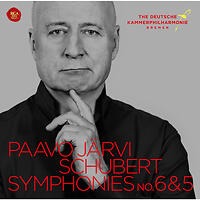
The result, refreshingly, illuminates the composer's innovative cast of mind and his quiet anticipation for what lay ahead.
This is the second instalment of a project that will run through five volumes and conclude in 2028. Across the series, Järvi and the Deutsche Kammerphilharmonie Bremen are recording the seven symphonies Schubert brought to completion—Nos. 1-6 and the towering No. 8, 'The Great', together with the inexhaustibly popular two-movement torso of 'Unfinished' (numbered here as No. 7) and a clutch of overtures.
Schubert composed the two symphonies featured on this disc in 1817-18, when he was barely twenty. The Fifth is the one most listeners think they know: easy on the ear, full of unforced charm, serene in temper, and scored – strikingly – without timpani or brass. The Sixth is its near opposite: vivid, theatrically inclined, often very funny, and saturated with the Rossini fever that had taken hold of Vienna at precisely the moment of its composition. Järvi and his players capture the distinct character of each in performances firmly rooted in historically informed practice.
Pulse, phrasing, dynamics and balance are crisply judged; the textures are immaculate, and each section of the orchestra offers colour that complements rather than competes. There is a closeness of feeling here, as well as a breadth of utterance – the chamber-scaled candour of the Fifth set against the more expansive ambition of the Sixth. The recording, made in session conditions by the Polyhymnia team and produced by Philip Traugott, is of superb quality and catches every nuance.
Symphony No. 5 is a fixture of the concert hall, and recordings are legion. Here, all the same, you find something different.