


search
date/time

Sat, 1:00PM
few clouds
22.8°C
NW 6mph
few clouds
22.8°C
NW 6mph
 | Sunrise | 4:42AM |
| Sunset | 7:35PM |  |

Ian Garner
Business Writer
P.ublished 19th June 2026
business
Meaningful Business, When Personal Challenges Meet The Workplace
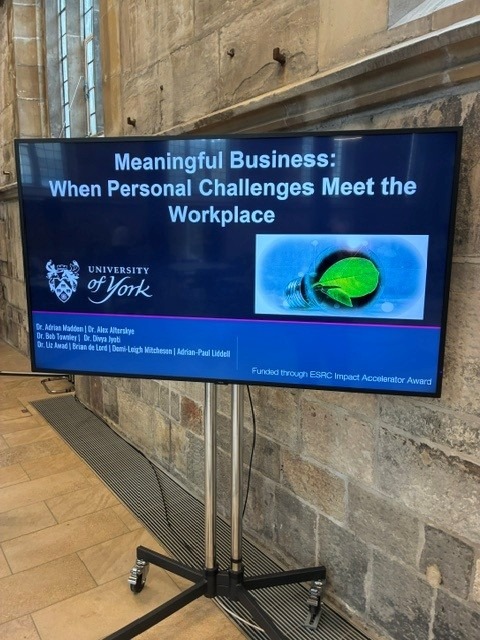
The event brought together business leaders, academics and practitioners to explore an important but often overlooked question: how do personal experiences such as grief, loss, shame, vulnerability and emotional strain affect us at work, and how should organisations respond?
Leading the discussions were Dr Bob Townley, Academic Lead for Employability and Enterprise at the University of York, and Dr Divya Jyoti from Lancaster University's Department of Organisation, Work and Technology. Rather than delivering a series of presentations, they created an interactive environment that encouraged reflection, discussion and honest participation.
One of the strongest messages I took away from the event was that meaningful business goes far beyond profit, performance metrics and productivity targets. Whilst these remain important, truly successful organisations also recognise the human experiences that employees bring with them every day. Personal challenges do not disappear when someone walks through the office door, and ignoring them can have a significant impact on wellbeing, engagement and organisational culture.
A particularly valuable learning point was the recognition that vulnerability should not be viewed as a weakness in the workplace. Throughout the discussions, speakers and participants shared examples of how openness and authenticity can strengthen relationships, build trust and create more resilient teams. When employees feel safe enough to discuss challenges they are facing, organisations are often better placed to provide support before problems escalate.
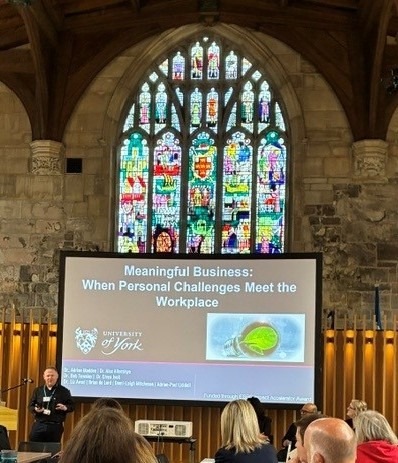
Another important lesson centred on the role of managers and leaders. The event reinforced that leadership is not only about delivering results; it is also about creating environments where people feel valued, understood and supported. Participants discussed how leaders who demonstrate empathy and emotional intelligence are often better equipped to foster trust, engagement and long-term organisational success.
The interactive elements of the session encouraged us to reflect on our own workplaces and consider how effectively we support colleagues facing personal challenges. These conversations revealed that whilst many organisations have policies in place, there is often a gap between policy and practice. One of the key takeaways was that support needs to be embedded into everyday workplace culture rather than reserved for times of crisis.
There was also a strong focus on practical action. Discussions explored ways organisations could respond more effectively to grief, emotional strain and personal hardship through flexible working practices, improved communication, better manager training and more compassionate policies. What made these suggestions particularly powerful was that they were grounded in real-life experiences rather than abstract theory.
By the end of the day, the central message was clear: organisations perform best when they recognise that employees are human beings first and workers second. Creating workplaces where people feel seen, heard and supported is not simply a wellbeing initiative; it is a fundamental part of building resilient, inclusive and successful organisations.
I left the event with a deeper understanding of how personal experiences shape workplace dynamics and with practical ideas that could help organisations create more compassionate and meaningful working environments. Most importantly, it reinforced the belief that conversations about vulnerability, wellbeing and personal challenges are not distractions from business success; they are an essential part of it.
Meaningful Business is a University of York Enterprise Works programme that promotes purpose-led enterprise, encouraging organisations to go beyond profit by creating lasting social, environmental and economic value for all stakeholders.
Also by Ian Garner...
The New Reality Of Work, Knowing When It’s Time To Move OnThe Changing Face Of Remote Working, Insights From British BusinessesBreaking The Bias Barrier: How Business Leaders Can Recognise And Tackle Unconscious PrejudiceMeetings Vs Momentum: How Smart Organisations Get Work DoneBeyond Bullet Points: The Art Of Effective PresentationsThe shortened address for this article is: newspub.uk/01zu3
Search Results