


search
date/time

Sat, 7:00PM
overcast clouds
21.4°C
NW 8mph
overcast clouds
21.4°C
NW 8mph
 | Sunrise | 3:41AM |
| Sunset | 8:22PM |  |
P.ublished 30th May 2026
arts
Opinion
Looking Ahead To The RPO's 80th Anniversary Season
Vasily Petrenko, Music Director at the Royal Philharmonic Orchestra
In this article, Vasily Petrenko shares his thoughts on the RPO’s 80th anniversary season.
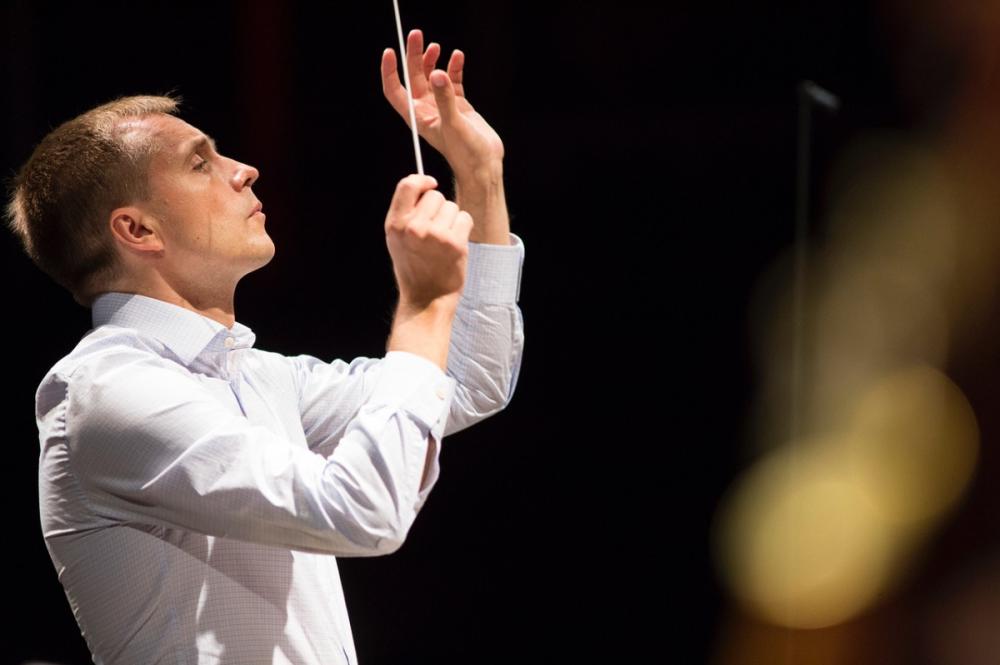
Vasily Petrenko
Photo: RPO
So, for me, our 80th anniversary season is a moment to look both ways. There is immense pride in where we have come from. And there is great excitement about where we are going.
This is also the first season in which I will be performing with the orchestra at all three of our London venues. The Royal Albert Hall has always felt like our great cathedral, the place for the large, epic symphonic statements, where the sheer scale of the music can fill every corner. The Royal Festival Hall brings its own tradition and grandeur. But what excites me especially this year is Cadogan Hall. It is more on the chamber scale, and that changes everything. The audience feels closer to the music, more included in the process, more genuinely part of what is happening on stage. And for a conductor, working in a smaller hall demands a different kind of discipline: you are attending to details of balance and ensemble that simply cannot be heard from eighty metres away in the Albert Hall. There is something very beautiful about that.
At Cadogan Hall we’ll perform Mozart's Jupiter Symphony, and this brings me to something new we are introducing: RPO Revealed. Before the performance, I will give an extended introduction, not simply talking, but playing fragments, illustrating the role of specific instruments, explaining what Mozart was thinking, and connecting the work to the broader compositional world of his time. My belief is simple: if you understand something of how a great symphony is built, how the ideas develop, what each instrument is contributing and why, then when you sit down to hear it performed, you hear it in an entirely different depth. You do not need to be an expert to experience that. You need only be curious.
When it comes to the season's great centrepieces, I would start with Ein Heldenleben. This symphonic tone poem by Richard Strauss is a remarkable vehicle for an orchestra, because it asks so many musicians to step forward and shine as soloists, as individual voices within the narrative. It is a monumental statement, and it feels exactly right for our 80th anniversary.
“Then there is Mahler's Second Symphony. We have performed this before, and that is precisely part of what makes it meaningful now. I want to understand the trajectory, to hear what has changed between that first performance and this one. What have the orchestra and I grown into together over that time? That kind of developmental arc, built across years of shared work, is what a long-term relationship between a music director and the orchestra can produce. We shall find out together.
“And then, Beethoven's Fifth. I know that this symphony has been recorded more times than perhaps any other, and that everyone has a view on how it should sound. But this is exactly why it continues to fascinate me. Every time I return to it, I find a new corner, something I want to approach slightly differently, always within what Beethoven has written, always following his markings and his intentions, but always searching for fresh energy. Because the energy in this piece is extraordinary.
From the sheer anxiety of those opening bars, that knocking at the door, to the blazing C major of the finale, which is one of the most sustained bursts of forward momentum in all of music. That never diminishes.
Our 80th anniversary season has, I believe, something for everyone. And I do not mean that lightly. Classical music has never belonged only to those who already know it. The greatest works speak to anyone willing to listen. That is what this season is built around: the belief that when you give people real access to this music, something happens. Something that is very difficult to put into words.
That is, perhaps, the whole point.