


search
date/time

Sat, 10:00PM
overcast clouds
22.1°C
NE 10mph
overcast clouds
22.1°C
NE 10mph
 | Sunrise | 3:46AM |
| Sunset | 8:32PM |  |

Jeremy Williams
Arts Correspondent
@jeremydwilliams
P.ublished 11th July 2026
arts
Interview
In Conversation: MORGXN And JB Somers
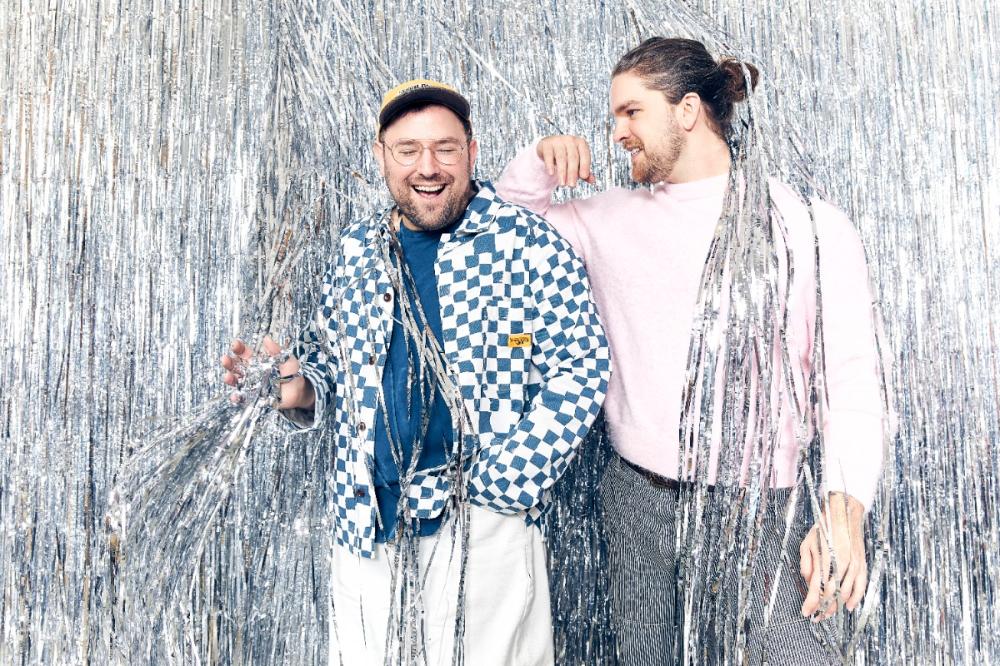
MORGXN and JB Somers
Photo:Joseph Ross
JB: It reminded me that this song isn’t just my story, it’s the story of so many queer men who grew up in the South. We both had fathers who didn’t really have space for emotion, vulnerability, or mental health. Empathy wasn’t always modeled for us.
Once the song became a duet, it stopped feeling like a personal journal entry and started feeling bigger than us. It became this shared experience between two queer men recognizing how common these wounds really are. There’s something really powerful about standing beside another queer artist and saying, ‘you lived this too.’
My hope is that when people hear it, they feel less alone in their own story and maybe start redefining what being a ‘real man’ actually means.
Morgxn: A good song will stop you in your tracks and that’s exactly what this song did. I don’t think I can recall feeling like a song had read my diary quite like this one. And I was honestly nervous to ask JB if he’d be open to doing a duet version. But I thought that the song was a universal cry and I so rarely see tender male duets. I’m so honored he let me add on.
JB: what was the emotional core you were trying to capture when you first wrote the song?
When I first wrote the song, I was really writing from the perspective of my younger self. I let myself go back into those memories and reconnect with the pressure and expectations I felt from my father, even when they were never directly spoken out loud.
I thought a lot about little JB and how terrified he was of not being enough or not fitting the mold of what a ‘real man’ was supposed to be. Music became my refuge. Performing became the place where I finally felt free, seen, and fully alive.
At its core, the song is about fear — the fear of disappointing people, the fear of being rejected, the fear of not measuring up. But I also realized pretty quickly that this isn’t just my story. It belongs to so many young men, especially young queer men, who grew up feeling like they had to earn love through performance or masculinity.
My hope is that the song keeps asking that question for generations: what does it actually mean to be a real man?
MORGXN, what specifically drew you to Real Man and made you want to be part of its next chapter?
The song was already perfect and needed nothing else. But as a duet it felt like a conversation between friends. My hope is that it inspires more men (straight and queer) to ask themselves this question.
Duets sometimes feel like we are getting a snapshot of a friendship, and I think this song is exactly that for me and JB. We’ve shared this song in some incredible spaces (CMA, Opry Radio…) and I think that’s because a powerful song is at the core of it.
I had a father who was very hard on himself. He never opened up the vault in the way I had hoped but this song felt like a prayer I wish he had heard.
How did growing up in the South shape your individual relationships with masculinity and vulnerability?
JB: Growing up in the South, there’s definitely this pressure to be a ‘man’s man’… whatever that even means. Honestly, the phrase itself always makes me laugh a little.
I felt a lot of pressure to be like my dad, my brother, my cousins – to fit into this version of masculinity that was really stoic and tough. You didn’t cry, you didn’t talk about your feelings, and the only emotion that ever really felt acceptable was anger. Sports were also treated like this huge marker of masculinity, which was unfortunate for me because I was absolutely terrible at anything involving coordination or team athletics.
There was this image of the Southern gentleman that I always felt like I was falling short of. For a long time, that made me feel broken or ‘less than.’
But honestly, where I’m at now feels really freeing. I think I’ve found a much healthier balance between the masculine and feminine parts of myself, and I don’t see those things as being at odds anymore. There’s something really beautiful about throwing off those old expectations and finally allowing yourself to just fully be who you are.
MORGXN: My dad was a business man. But he also failed a lot. That was not something he liked to admit.
When he passed away in 2015, it left more questions than answers. That is one of the hardest parts about my grief. But as years have gone on, I’ve found that songs kind of speak to different parts of my relationship with him.
When I first heard Real Man - that was the feeling for me. It felt like a conversation I wish I had been able to have with my father.
I never felt like the man he wanted me to be.. But at the end of the day I’m exactly the man I need to be for myself.
The song challenges traditional ideas of what it means to be a man—have your definitions evolved over time?
JB: Absolutely. My definition of masculinity has evolved so much over time. Growing up, I think I was taught that being a man meant being tough, emotionally closed off, dominant, and unaffected by things. But the older I get, the more I realise the strongest men I know are actually the most empathetic ones.
To me, being a man has nothing to do with fitting into one specific mould. Men come in all shapes, sizes, races, identities, and expressions. The common trait that matters most to me now is emotional awareness and empathy — being able to understand your own emotions while also making space for other people’s emotions.
I think real strength is vulnerability. It’s kindness. It’s accountability. It’s choosing understanding over control. That feels far more masculine to me than pretending you never hurt or never feel anything.
MORGXN: I remember asking a sound engineer friend of mine if he could describe himself using any descriptors except “work in music… or MALE” and he really choked up at it. He got kind of mad. He was straight, but I don’t know if I can comment on that exactly. He just could not see any way to describe himself without telling me what he did to earn value or how his genetics were laid out.
I think that’s the thing that has shifted for me. My ‘man’ aspects are just human stuff. And the rest is just drag.
What was the studio experience like recording together in Nashville—did anything unexpected happen creatively?
JB: We had an absolute blast recording it in Jesse’s studio in Nashville. I love collaborating with incredibly talented people, and Morgxn is definitely at the top of that list. The whole process felt really effortless in the best way.
Jesse created such a safe and creative environment, which allowed all of us to just fully lean into the emotion and the energy of the song without overthinking it. Honestly, it was one of the easiest and most enjoyable studio days I’ve had in a long time.
What surprised me most was how naturally MORGXN and I played off each other vocally and emotionally. We were kind of pushing each other in real time — not competitively, but creatively — and I think you can hear that chemistry in the final recording.
There was something really beautiful about watching the song evolve from this deeply personal thing into something shared between all of us in the room.
MORGXN: First of all - Jesse Brock - is one of my safe spaces in Nashville. It’s so important recording with people who have your back. Unfortunately, in the south you don’t always know if you’ll be working with people who care about your humanity. They may vote for people who literally want you erased and that won’t work for me.
So having a safe space is one thing. And then me and JB are just artists. We hang. We vibe. We create. That was the spirit of the recording. Effortless and sweet.
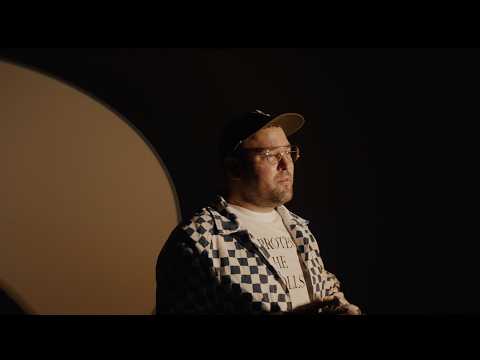
There’s a sense of dialogue in the duet—did you approach your vocal performances as a conversation?
JB: Absolutely. I try to approach most of my life as a conversation, so naturally we approached the vocal performances that way too. To me, this song feels like a kitchen table discussion more than a performance.
I imagined myself sitting across from other men genuinely asking, ‘What does being a real man mean to you?’ Not from a place of judgement, but from a real desire to understand each other better.
I think that openness is what gives the duet its emotional weight. It doesn’t feel like two people trying to out-sing each other. It feels like two people being honest with one another in real time.
If we want things to change culturally, we have to be willing to have deeper conversations with people we trust. We have to go to uncomfortable places emotionally and really mine those experiences for growth. I think the vocal performance reflects that vulnerability and openness throughout the song.
MORGXN: Duets are just conversations. Every duet I’ve ever done (and I’m lucky I’ve done some really incredible ones and have several on my Heartland (Deluxe) album) is just a conversation between friends.
I don’t have a team pushing me to collaborate because it would be ‘cool’. My collaborations are born out of friendship. And I think you hear that on this record.
JB and I have that shared southern heart. But we have pushed through a lot of pain to get to the tender good stuff.
And I think that’s the best kind of collaboration.
How do your different musical backgrounds (pop and country influences) enhance the emotional impact of the track?
JB: Storytelling is really at the centre of everything I do as an artist. I believe the best songs come from honest, lived experiences. The more specific and personal you’re willing to be, the more likely it is to connect with someone else’s life. That’s what music is all about to me, connection.
I think the blend of pop and country influences on this track helps amplify that emotional connection. Country music brings this raw, conversational storytelling element, while pop has a way of delivering emotion with immediacy and scale. Together, they allow the message to feel both intimate and universal.
Joni Mitchell has always been one of my biggest inspirations when it comes to songwriting. I mean… come on, she’s an absolute force. The way she tells stories with honesty and detail is something I deeply admire and try to emulate in my own writing.
Vocally, though, I pull from a lot of different influences. Aretha Franklin is someone I think about often because she sang with so much passion, conviction, and emotional truth. Those are the kinds of artists that shaped me artists who weren’t afraid to fully feel something in front of people.
MORGXN: I listened to all sorts of music growing up. One that’s coming to mind right now is Luther Vandross. I didn’t know he was gay when I first heard his music. I don’t think it was safe for him to be open at that time with the career he had. But it makes so much sense that I could hear that tenderness and pain in his vocal. It’s the human that makes the voice. Not the voice that makes the human.
I don’t think too much when I sing … it’s one of the only places where I feel most connected to some chord of truth. And so I can’t say what influences are where or where they are not.
I just know voices like Stevie Wonder's, Luther Vandross's, Vince Gill's... these are voices that I always looked up to. I hope it comes through in my music.
JB, as a pastor’s kid, how did faith and upbringing influence the themes in Real Man?
Faith has always been deeply intertwined with my life. Growing up as a pastor’s kid, the teachings of Jesus were a huge part of my foundation, and honestly, they still are. At the core of those teachings, I see compassion, empathy, humility, and love.
But growing up, I also witnessed a disconnect at times between what was preached and how people actually treated one another, especially when it came to masculinity, vulnerability, and queerness. I was fortunate to have a few incredible mentors and examples in my life, but I still carried a lot of confusion about whether I was allowed to fully be myself.
I think Real Man opens the door to a bigger conversation about the ways Christianity, or at least certain expressions of it have sometimes put both God and manhood into very narrow boxes.
For me, the question became: if we really believe people are created in the divine image, why are so many taught to hate parts of themselves? Why are we so quick to reject what may actually be worthy of love and care?
Ultimately, I believe faith and spirituality should help us love people better, not limit their humanity. And I think men, especially, need more space to fully understand themselves emotionally and spiritually so they can genuinely love themselves and, from that overflow, love others well.
MORGXN, you’ve been a strong advocate for LGBTQ+ visibility—how does this song fit into your broader artistic mission?
A lot of what I see in even the gay community is a toxic masculinity that I think should be challenged. I hope a ‘real man’ is someone who can cry, listen, be tender and still cause a scene. I think this is an important song for the queer community. Also JB is a queer icon and I love collaborating with icons.
The line “I don’t want to be a real man” is striking—what does rejecting that label represent to you personally?
JB: For me, it’s really a rejection of the hyper-masculine version of manhood that I grew up around the idea that being a ‘real man’ means suppressing emotion, avoiding vulnerability, leading with anger, or carrying shame in silence.
When I say, ‘I don’t want to be a real man,’ I’m not rejecting manhood itself. I’m rejecting the version of it that tells people they have to disconnect from themselves and others in order to be accepted.
I want to forge my own definition of what being a man means one rooted in empathy, honesty, love, and respect for other people. I don’t want to inherit generations of shame, emotional repression, or fear.
To me, being a real man is actually having the courage to fully know yourself, to care deeply, and to love people well. That’s the version of masculinity I want to embody.
Why do you think conversations around masculinity, especially in Southern culture, are shifting right now?
JB: I think conversations around masculinity are shifting because a lot of people are realizing the old model isn’t working anymore. For a long time, strength was associated with dominance, emotional repression, control, and power at all costs. But I think more and more people, especially younger generations, are questioning whether those traits actually create healthier men or a healthier society.
We’re living in a really intense political and cultural moment, and I think that’s forcing people to examine what leadership, strength, and manhood actually look like. A lot of public figures still represent this older blueprint of masculinity that values aggression over empathy and image over emotional intelligence. But I think many men are exhausted by that narrative.
There’s a growing desire to create something healthier, a version of masculinity where women, queer people, trans people, and children feel safe, respected, seen, and loved. To me, real strength isn’t about domination. It’s about accountability, compassion, emotional honesty, and the willingness to protect and care for others.
I think we’re in the middle of redefining manhood in real time, and that’s both uncomfortable and really beautiful.
MORGXN: Well when a White House hosts a big ole UFC fight on their lawn and says that real men make fun of women and don’t care about their neighbours… I think we have a stark contrast to the heart of this song. I think we need songs and artists like JB who challenge the very mould of a man.
How have fans responded to the song so far—have any reactions surprised or moved you?
JB: The response has honestly been really emotional and surprising in the best way. I expected the song to resonate with queer people, but what’s really moved me is how many straight men have reached out privately to thank me for it.
A lot of them have shared stories about being called names like ‘faggot’ on the playground before they even understood what the word meant, simply because they were creative, sensitive, artistic, or more emotionally expressive than what was considered ‘normal’ for boys. That really struck me.
It made me realise this song is bigger than sexuality. It’s about the pressure so many men feel to abandon parts of themselves in order to fit into a narrow definition of masculinity.
I keep thinking about how absurd it is that society has often treated artistry or emotional depth as weakness. Imagine calling Bach ‘less of a man’ because he was gifted at music. It’s almost laughable when you step back and think about it.
More than anything, I’ve just been incredibly moved by how many people have told me this song made them feel seen. Hearing people say it’s become one of their favourite songs or that it gave language to feelings they’ve carried for years means everything to me.
MORGXN: I think my favourite is performing the song and getting to the end of the first chorus and hearing an audible ‘wow’ when people hear the heart and message of the song.
What do you hope listeners—especially young men—take away from hearing this duet?
JB: I hope young men walk away from this song realizing they don’t have to spend their lives trying to fit into someone else’s expectations of who they should be. Whether those expectations come from parents, culture, religion, or society at large, you’re allowed to question them.
I want people to know it’s okay to break the mold. It’s okay if your path looks different from the one that was laid out for you. There’s nothing wrong with being sensitive, artistic, emotional, nurturing, or deeply feeling. Those things are strengths.
More than anything, I hope the song gives people permission to fully become themselves. Your life belongs to you. Forge your own path one that feels honest and aligned with who you truly are, not just who you were told to be.
MORGXN: I hope young men give themselves permission to feel deeply and not be afraid to cry and feel publicly.
Looking ahead, do you see yourselves collaborating again or continuing to explore these themes in future music?
JBWe’re two queer boys in the South making music… of course we’re going to collaborate again.
Working with Morgxn felt incredibly natural creatively and personally. There’s a real trust and understanding there, which makes creating together really special. I have so much love and respect for them as an artist and as a human being
Who knows exactly when the next collaboration will happen, but I definitely don’t think this is the last time we’ll create together. And honestly, I think these themes identity, vulnerability, masculinity, love, empathy are conversations I’ll probably continue exploring in my music for a very long time.
MORGXN: These themes are bedrocks of my music and artistry.. So I’ll absolutely be exploring them forever. JB and I will also sing together for the rest of our lives. I can’t wait for what comes next.