


search
date/time

Sat, 1:00AM
overcast clouds
10.8°C
NW 6mph
overcast clouds
10.8°C
NW 6mph
 | Sunrise | 4:54AM |
| Sunset | 7:20PM |  |
P.ublished 13th June 2026
nature
How To Plant Your Best Borders Yet With British Garden Centres
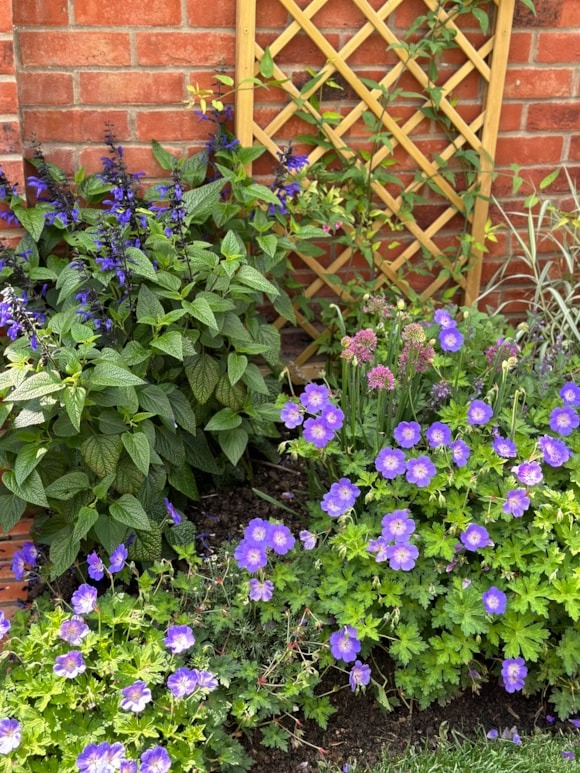
Photo: BGC
The principle is straightforward with tall plants at the back, medium plants through the middle, and low plants spilling over the front edge. Work in those three layers, and the border more or less designs itself.
Get your soil ready
Before you start planting your border with plants, dig the bed over, remove any weeds and work in a generous amount of compost or well-rotted manure. It takes half an hour, and it is genuinely the difference between plants that sit there looking sorry for themselves and plants that thrive. Water the bed before you start planting, not after, so the soil is moist and ready to go.
Back of the border
The back of your border is all about height and structure, and where you can be a little bolder than you might think. Delphiniums are an obvious choice with their tall spikes in blue, purple and white that are hard to beat in high summer. Crocosmia is also one that always stops people in their tracks with its arching stems of intense flame-red flowers in July and August that look almost tropical against green foliage.
Rudbeckia’s warm golden daisies flower from July right through to October when most other things are winding down, and are a magnet for bees, whilst hollyhock brings old-fashioned height and charm in soft pinks, deep reds and creamy whites. Buddleia is another great plant to have at the back, which will have butterflies queuing up from August onwards.
For something a little more contemporary, Miscanthus, an ornamental grass, adds movement and an airy quality that no flowering plant can quite replicate, and it looks genuinely beautiful through autumn and winter when everything else has been cut back.
The middle ground
This is an important section of planting, but get it right, and the whole border comes together. Echinacea is a brilliant starting point with its warm pink coneflowers, which have a relaxed, late-summer quality that works with almost everything around them. Helenium with its amber, copper and burnt orange tones, flowers at exactly the right moment when you need the border to carry on performing into September.
Astrantia has amazing flowers that are intricate and star-shaped, in white, pale pink or deep burgundy, whilst Penstemon bulks out a border with its long tubular flowers in coral, pink and purple all summer, with very little fuss. Salvia has had something of a renaissance in British gardens over the past few years, and deservedly so, the rich purple and blue spikes providing height and colour through the middle of the border without taking up much space.
For shadier or damper spots, Astilbe, with its feathery plumes in pinks and reds, brings genuine colour to the places where little else wants to grow. And if you want something delicate and pretty to thread between the bolder plants, Scabiosa, known as the pincushion flower, produces a constant stream of soft lavender-blue flowers on long stems from June right through to October.
Front of your border
The front of a border does more work than people give it credit for, as it's what you see first, it is what softens the whole thing, and it is what makes the difference between a border that looks finished and one that doesn’t quite.
Lavender is an obvious choice for a sunny spot, buy it now while it is in flower so you can choose the exact shade, and it will reward you with fragrance and colour all summer. Agapanthus is less obvious but far more dramatic: those extraordinary spherical flowerheads in the deepest, most saturated blue look almost architectural at the front of a border, and they flower for weeks through mid to late summer.
Geum is a cheerful cup-shaped flower in warm orange and red that goes on far longer than you’d expect, compact enough to sit right at the very front of the border without overwhelming anything. Erigeron has a wildness about it that suits a more relaxed planting style, whilst Sedum won’t do much right now, but come August, it starts to show its hand, and by September and October, when it’s covered in flat heads of deep pink fading slowly to copper, you’ll be very glad you planted it.
Heuchera is the reliable constant in your border with its evergreen foliage in plum, caramel and lime green that looks good whatever else is happening in the border. Nepeta gives you an upright mound of soft lavender-blue flowers that pollinators adore, and if you cut it back hard after its first flush, it will come back with a second wave of blooms in late summer, just when you need it most.
Julian Palphramand at British Garden Centres said: “Whether you're planting your very first border or looking to finally get it right, the secret is simpler than most people think. Get your layers right, choose plants you love, and give them a good start in the soil, and the rest takes care of itself. We want every gardener to come home from one of our centres this summer feeling genuinely excited to get out there and plant something beautiful.”
The shortened address for this article is: newspub.uk/01zre
Search Results