


search
date/time

Mon, 1:00AM
overcast clouds
18.3°C
WSW 14mph
overcast clouds
18.3°C
WSW 14mph
 | Sunrise | 3:40AM |
| Sunset | 8:37PM |  |

Andrew Liddle
Guest Writer
P.ublished 9th May 2026
arts
Genius, Construction, Or Carefully Managed Myth?
Andrew Liddle considers the Beatles and their musical development
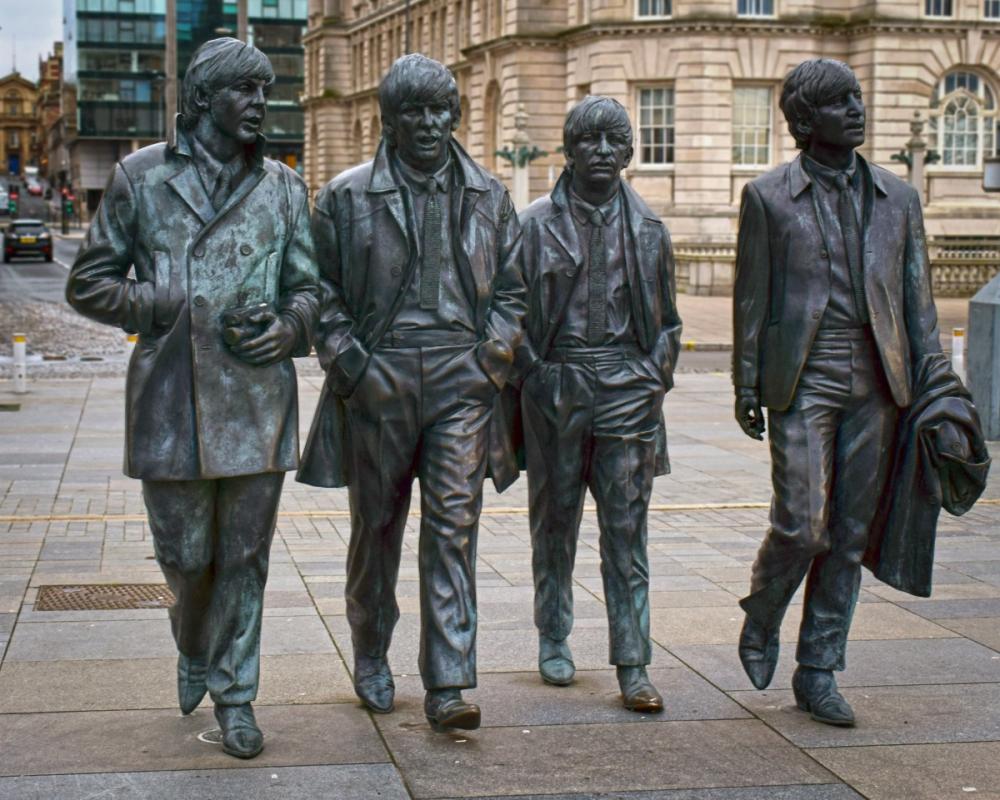
Image by Dimitris Vetsikas from Pixabay
The remark may simply reflect loose language or Martin asserting his role in shaping recordings. Yet he did write the string arrangement that defines Yesterday’s recorded identity. Actually an ambiguity - between conceiving and writing a song and shaping how it is heard - does seem to run through the entire Beatles’ catalogue and unsettles the familiar narrative of straightforward genius.
There is no serious doubt that Lennon and McCartney wrote a substantial body of material. But it is equally clear that they operated within a wider system that shaped, refined, and amplified their work. At the centre stood Brian Epstein, their manager, who in fact did more than ‘manage’ the band. He curated it. He softened their image, suppressed the fact that Lennon was married, controlled their presentation, and in many ways converted a rough Liverpool club act into a polished cultural product suitable for mass consumption.
Image by Ralf Ruppert from Pixabay
Their recordings were not created in isolation. From early on they worked under producer George Martin, sometimes called ‘the fifth Beatle’, whose role extended beyond recording supervision into arrangement and orchestration. A classically-trained producer at EMI, he brought orchestral literacy, structural discipline, and studio know-how that the group initially lacked. Before the Beatles, Martin had worked across a wide range of Parlophone recording stars, and later helped to create the success of several Merseybeat bands, notably Gerry and the Pacemakers and The Searchers. These were not manufactured in any crude sense, like The Monkees in America, but they emerged from a studio culture in which arrangement, production, and presentation increasingly defined what popular music actually was.

Image by Danilo from Pixabay
On that album, songs are no longer consistently ‘band performances’, collectively played by 4 individuals, in any traditional sense. Eleanor Rigby contains no rock instrumentation at all, existing instead as a string arrangement seemingly created under Martin’s direction. Tomorrow Never Knows is built from tape loops, reversed recordings, and heavily processed sound, and is closer to a studio construction than songwriting in any conventional form. Even the more straightforward tracks are fashioned extensively after the fact, where retrospective editing and production decisions become part of the composition itself.
At this point, the question of authorship begins to blur in a serious way. The songs are credited to Lennon-McCartney, yes, but the recorded reality is the product of a wider system in which composition, arrangement, performance, and production are no longer cleanly separable. The Beatles remain at the centre of the process, but it may well be contended they are no longer its sole creative agents.

Image Mike from Pexels
The answer lies less in sudden artistic evolution than in absorption. Their early identity was built through imitation and adaptation of American popular music. Chuck Berry and Little Richard supplied the rhythmic and vocal vocabulary of early rock and roll. Elvis Presley provided not just a sound but a model of performance-identity itself. We know that Lennon admired Elvis and at an early stage modelled himself on him, greased back hair and all. Buddy Holly and The Crickets perhaps offered something more structurally important, the idea of the self-contained group writing its own material, that might well have appealed to the similarly bespectacled (at that stage) McCartney. The latter is on record as having been impressed by Holly’s move from a rockabilly sound to the lush orchestrations of, say, True Love Ways.
Their vocal identity owes much to The Everly Brothers, whose close-harmony singing became a direct template for Lennon-McCartney arrangements. What is often described as a uniquely Beatles’ sound is, in fact, in large part, a disciplined refinement of these existing forms and others.
In America, Brian Wilson and the Beach Boys had turned the studio into a compositional space. Increasingly on both sides of the Atlantic, albums were less collections of songs and more were they carefully constructed artistic statements. Finally, after the Beatles’ trip to India to worship at the feet of Ravi Shankar, there was some well publicised absorption of non-Western musical influences.
The shift in style of the lyrics and their increasing sophistication may also have been externally driven. Bob Dylan expanded what popular songwriting could contain, introducing ambiguity, social concern, protest and introspection into mainstream pop. In this country Donovan’s folk songs, for want of a better term, were genuinely poetic.
What emerges from all this is not a single linear story of artistic development, but a rapid accumulation of influences, absorbed, recombined, and refined under intense commercial and technological pressure.
A song like Hey Jude, released in 1968, illustrates how far the band had travelled. At first hearing it appears simply a piano-based ballad with a limited harmonic structure. Yet its recorded form is highly unconventional and in some ways its structure resembles that of an aria. At over seven minutes, it certainly broke jukebox and radio norms - while the extended coda transformed repetition into something closer to collective ritual than conventional pop composition. The core material is McCartney’s, but its final form depends heavily on arrangement, pacing, and studio decisions made within the recording studio, and guided by Martin. Lennon had no role in its composition and later offered his own competing interpretation of its meaning, further complicating the mythology of authorship.

Image Isabella Mendes from Pexels
As the decade wound down and internal tensions grew, Lennon became increasingly disengaged and the collaborative structure that had enabled rapid development began to fracture. Both Lennon before his death and McCartney long after it remained productive, yet much of their later output has not carried the same cultural force. One obvious explanation is that the Beatles’ achievement depended less on isolated genius than on sustained creative tension, between Lennon and McCartney, between the band and record producer, and between the raw material of lyrics on the back of fag packets and external constraints.
I should add a personal note here. I have never been an admirer of the Beatles. At the time, what annoyed me most was the way they seemed to eclipse, and in some cases displace, the very rock and roll figures who had shaped them and indeed were my own early musical influences. But I think I knew hype when I saw it and I did not find myself persuaded by any of the surrounding mythology.

Image from Pixabay
In this light, the Beatles appear less as two self-contained geniuses plus two others and more as the public face of a highly efficient cultural and industrial system. I now see their songs as the raw material, and no longer find myself annoyed that their recorded sound, image, and global reach were a product of collaboration with others, studio production skills and media amplification.
George Martin was not, in my opinion, a peripheral technician but a central creative force within this system, operating across multiple successful pop bands and helping define the grammar and rhetoric of British pop production in the 1960s.
So what? None of this actually diminishes their importance.
But it does challenge the mythology. Let’s conclude The Beatles were not simply creators in isolation but participants in a system that made their creativity larger, faster, and more visible than it could ever have been alone. The result is music that has stood the test of time and still feels original, even if its origins, on closer inspection, are anything but simple.