


search
date/time

Fri, 7:00AM
light rain
15.8°C
WSW 16mph
light rain
15.8°C
WSW 16mph
 | Sunrise | 6:20AM |
| Sunset | 5:22PM |  |

Andrew Palmer
Group Editor
P.ublished 27th June 2026
arts
Interview
Discovering The Slave's Ghost Letter That Became A Cathedral Play
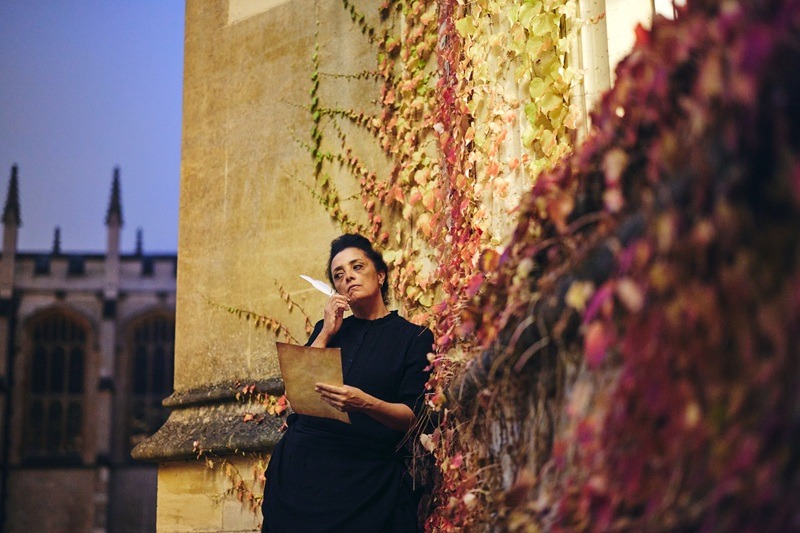
Desirée Baptiste's dramatic play-poem, arrives at Ripon Theatre Festival on Tuesday 7 July
Photo: Fisher Studios
Incidents in the Life of An Anglican Slave, Desirée Baptiste's dramatic play-poem, arrives at Ripon Theatre Festival on Tuesday 7 July, followed by a Q&A with the writer-performer. It is built around what is believed to be the earliest written plea for freedom by an enslaved person anywhere in the British Empire, unearthed in the Church of England's own archives at Lambeth Palace Library. Ahead of the performance, I spoke to Baptiste about the find that started it all, the act of giving an anonymous voice its due, and why — for all the weight of its subject — she is adamant the evening should be, above everything else, entertaining.
Baptiste had known of the letter's existence for some years before she finally held it, having come across a summary of its contents in a scholarly article. But nothing, she says, prepared her for standing in its presence. This is, after all, the earliest known written plea for freedom by an enslaved person in the British Empire – and nearly three hundred years on, that fact pressed in on her in a way reading about it never had.
The words fell on the page in verse. The form chose me, not the other way around.
It is the kind of detail only close, physical scrutiny of a document can surface, and it transformed how Baptiste understood the letter's author. This was not someone appealing modestly to a local bishop but an enslaved person, with no resources and no standing whatsoever, aiming their plea at the most senior cleric in the entire Church of England – and, in the same breath, at the King. "The magnitude of it, the scale of the enslaved writer's ambition and courage, moved me greatly," she says. "It inspired me to pen the play." She raised the discrepancy with Lambeth Palace Library directly; they agreed with her reading, and the catalogue entry has since been amended.
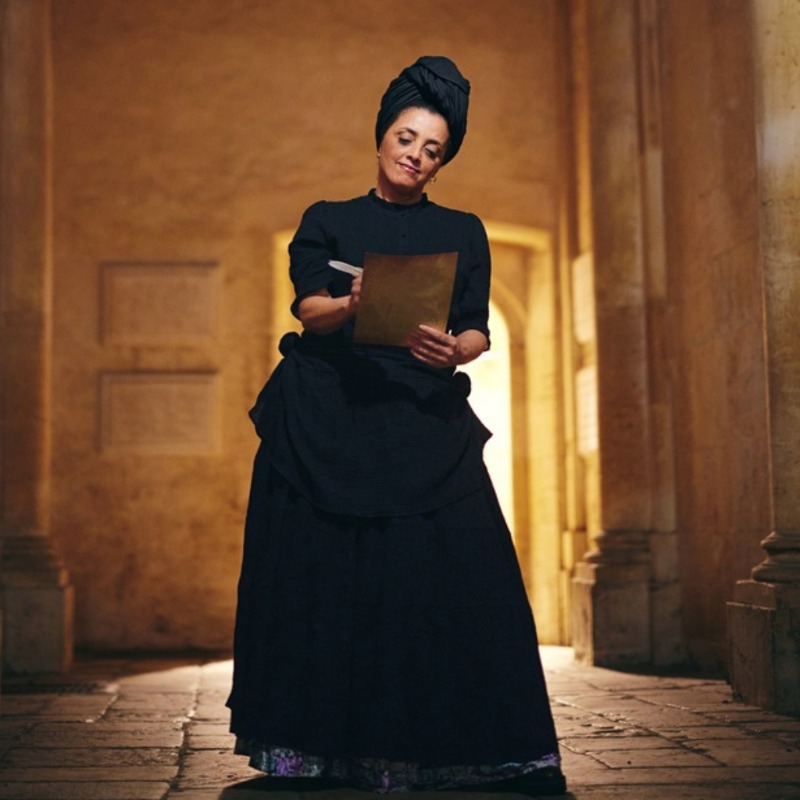
Desirée Baptiste
Photo: Fisher Studios
What the letter itself reveals about its author is fragmentary but telling. They were of mixed Black and white heritage, described in the period's own brutal shorthand as "mulatto"; enslaved, strikingly, by their brother; raised within the Church of England; and subject to a violent overseer. They had no time to write except on Sundays. What remains unknown — and likely always will — is the writer's gender, their age, precisely where in Virginia they were held, or how, against every obstacle the system threw up, they came to be able to write at all. Baptiste says she can't identify a single detail from the original letter that didn't find its way into the play, even if only in passing.
There is a bitter irony, too, in who the letter appeals to. It pleads not just with the Archbishop but with the King and "other rulers" for freedom – and it is unlikely, as Baptiste points out, that its author knew quite how compromised those figures were. In the very decade the letter was written, Archbishop Wake was complicit in the purchase of enslaved Africans for the Codrington estate in Barbados, a plantation owned outright by the Church of England. The monarchy, meanwhile, had been officially entangled (by royal charter) in the transatlantic trafficking of enslaved people since the 1660s. The letter's writer assumed a moral authority at the top of English church and state that, in reality, was itself bound up in the very trade they were begging to escape.
The decision to render all this as a play-poem, rather than as straight drama or historical lecture, wasn't really a decision at all, Baptiste says: "The words fell on the page in verse. The form chose me, not the other way around." That form has now travelled a long way from Lambeth – to Chester Cathedral, the Edinburgh Fringe, and venues in Barbados - Grenada, and SVG (St. Vincent and the Grenadines) – and Baptiste says the piece itself has never changed in the telling. What shifts, performance to performance and country to country, is simply how each audience responds to it.
This is, first and foremost, storytelling and entertainment — some might call it edu-tainment. And it is truly a great story.
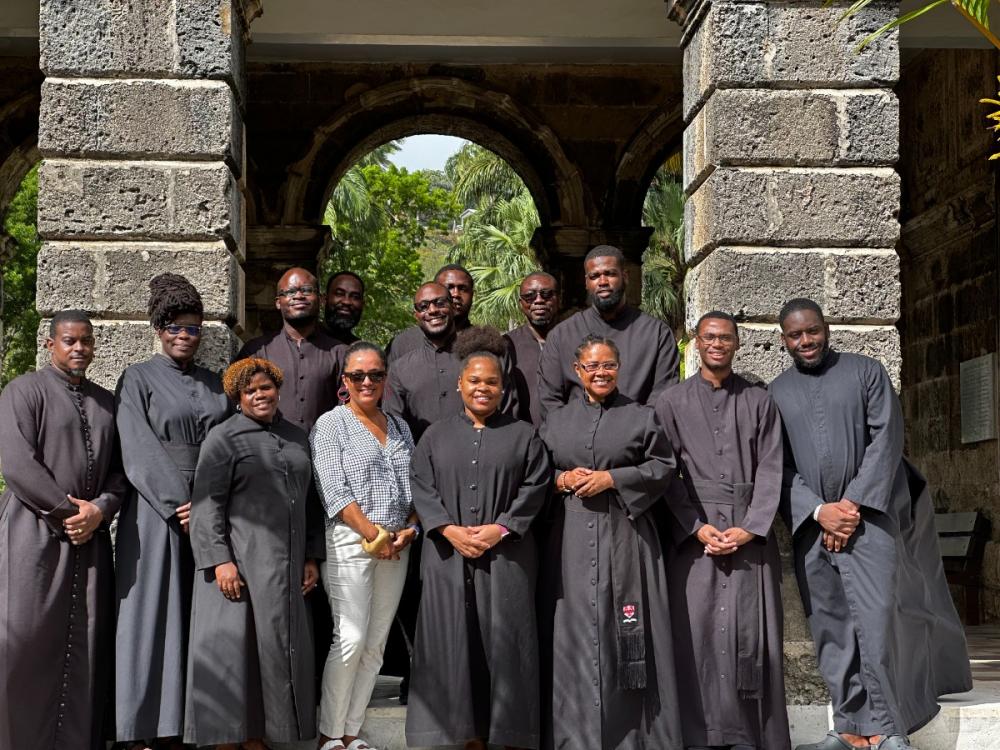
Desirée Baptiste with seminarians at Codrington College in Barbados, which was once the Codrington Estate where hundreds of enslaved people were held captive in the 18th through to early 19th C. At least two 18th c Archbishops of Canterbury were directly involved in the purchasing of trafficked Africans for delivery to the Codrington Estate (which was owned by the Church of England’s missionary arm, the SPG or Society for the Propagation of the Gospel in Foreign Parts)
There's a local thread here too, one Baptiste isn't quite ready to pull on. Yorkshire has its own deep entanglement with slavery wealth — Harewood House and the Lascelles family, a few miles from Ripon, are the most prominent examples. Asked whether that history feeds into the piece, she demurs with a smile: she'd be giving away some of the play's surprises if she said any more. The post-show Q&A, she adds, is where these threads tend to get pulled properly — conversations she describes as consistently intelligent and engaging, as illuminating for her as the writer as they are for the audience.
For anyone tempted to give it a miss on the assumption it sounds like heavy going, Baptiste has a simple answer: "Expect to be entertained. This is, first and foremost, storytelling and entertainment — some might call it edu-tainment. And it is truly a great story."
Also by Andrew Palmer...
Rank's Gong To Sound Again On Hull's WaterfrontClassical Music: Ralph Vaughan Williams From Ursula, With LoveClassical Music: Granville Bantock Orchestral WorksClassical Music: Franck Quintet Enescu OctetClassical Music: Requiem Da Camera, For St Cecilia & In Terra Pax The shortened address for this article is: newspub.uk/01zy4
More in this series...
A Stunning Conclusion: Romeo and Juliet Brings The Curtain Down On Ripon Theatre Festival 2026No Town Of Culture Title, But Ripon Already Knows What It's WorthVoice In The DarkBreathless In Ripon: Stephen Smith's One Man Poe Is Gothic Horror At Its Finest.Riot Women, Meet Your Match: Batty! Brings Menopausal Rebellion To RiponSeeing Red — And Loving Every MinuteA Ghost Speaks, And A Cathedral ListensLepers, Book Of Job And A Festival That Isn't Afraid To Show Its WorkingsCurtain Rises On Milestone Fifth Ripon Theatre Festival With Two Powerful New PlaysAll Singing, All Dancing, All AmberRipon Theatre Festival Boosts Youth Engagement At RTF26