


search
date/time

Thu, 10:00PM
overcast clouds
29.7°C
NW 7mph
overcast clouds
29.7°C
NW 7mph
 | Sunrise | 4:38AM |
| Sunset | 7:40PM |  |
P.ublished 13th August 2026
frontpage
Armexis Urges Swift Action To Keep The UK Safe
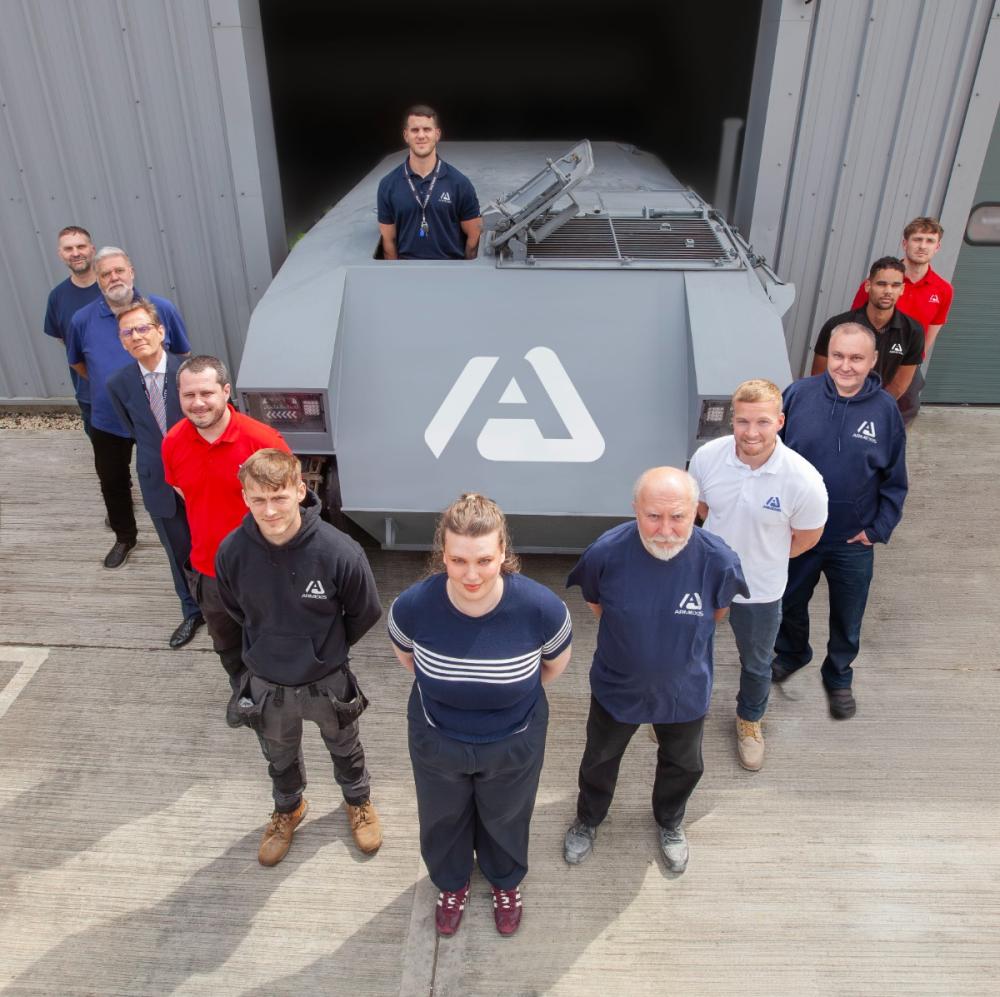
ARMEXIS team with unmanned ground vehicles
ARMEXIS argues that the Government’s Defence Investment Plan (DIP) must be judged not by headline funding alone, but by whether it delivers real capability, industrial resilience and the ability to scale production at the speed demanded by modern conflict.
The company recognises that the DIP understands the scale of the challenge facing the UK, including the need for autonomous systems, long-range strike, artificial intelligence, armoured vehicles, munitions, sovereign capability and greater industrial resilience.
ARMEXIS welcomes that direction of travel, but believes the critical test is now delivery: whether Britain can build, repair, replenish, and sustain military capability quickly enough to deter adversaries and support allies in a deteriorating global security environment.

Olivia Price
The lesson from Ukraine is clear. A nation’s armed forces are only as strong as the industry, innovators, and workers behind them. Britain cannot rely on long-cycle procurement, fragile supply chains, or small production runs and expect to deter peer-level threats. We need sovereign capability, industrial readiness, and platforms that can be produced, maintained, and adapted at wartime pace.
We are particularly concerned that Britain’s land capability remains exposed after decades of underinvestment, slow procurement, and limited domestic industrial continuity. Major platform programmes have too often been delayed, overcomplicated, or delivered in quantities that do not reflect the scale of attrition seen in Ukraine. ARMEXIS believes Britain must now place greater value on speed, volume, adaptability, and sovereign manufacturing if it is serious about credible deterrence.
The Strategic Defence Review makes clear that the UK must move to warfighting readiness, accelerate innovation, and build a closer relationship between defence, industry, and society.
It also recognises that the British Army will continue to need armoured platforms to confront major state adversaries, take and hold ground, and protect personnel on a battlefield increasingly shaped by drones, precision weapons, electronic warfare, and wide-area effects.
ARMEXIS believes this is where the national conversation must now focus. Modern war is not won by technology alone. Drones, autonomy, AI, and data are essential, but they must be integrated with protected mobility, logistics, battlefield repair, spare parts, trained personnel, and manufacturing depth. The UK cannot afford a defence model built around limited quantities, extended timelines, and supply chains that may not withstand the pressure of a prolonged conflict.
That concern has already been reflected in Parliament’s own scrutiny of defence procurement, with repeated criticism of a system that is too slow, too complex, and too weak on accountability. ARMEXIS believes Britain must move away from a culture in which programmes can take decades, requirements become increasingly complex, and failure is too often absorbed rather than corrected.
The solution is not simply more money. It is smarter, faster, and more sovereign spending. The UK needs procurement that values time as a strategic asset, backs credible challenger companies, supports British SMEs, rewards delivery, and prioritises equipment that can be manufactured, maintained, and improved at pace.
Olivia Price added: “The UK does not just need a bigger defence budget. It needs a defence industrial base that can actually deliver. That means backing British SMEs, shortening procurement timelines, protecting critical supply chains, rebuilding engineering skills, and ensuring that the UK can manufacture the platforms, spares, and systems needed to sustain a long campaign. Deterrence is not a speech. Deterrence is capability, credibility, and capacity.”
“We are positioning ourselves as part of that answer. We are developing a lean, scalable, and cost-conscious defence manufacturing model focused on tracked armoured platforms, protected mobility, and uncrewed ground vehicle capability. We have already secured initial orders worth a combined £17.5 million for Ukraine-bound armoured vehicles, demonstrating both commercial demand and operational relevance at a time when Britain is seeking to rebuild sovereign defence production.”
The company also believes defence must be treated as a national economic project. Reindustrialisation for defence can create skilled employment, strengthen regional manufacturing, increase exports, rebuild supply chains, and reduce strategic dependence on imports during crisis or war. Defence manufacturing should not be viewed simply as a cost to the Treasury, but as a foundation of national security, economic resilience, and sovereign freedom of action.

Arron Flint
“The UK must adopt a wartime-readiness mindset before events force one upon it. That means building more at home, buying faster, supporting SMEs, attracting private capital into defence, restoring manufacturing depth, and treating defence not as a discretionary expense, but as the foundation of national survival, prosperity, and sovereignty.”
The shortened address for this article is: newspub.uk/020hc
Search Results